
Horse Population in UK Racing — Trends, Data and Industry Response
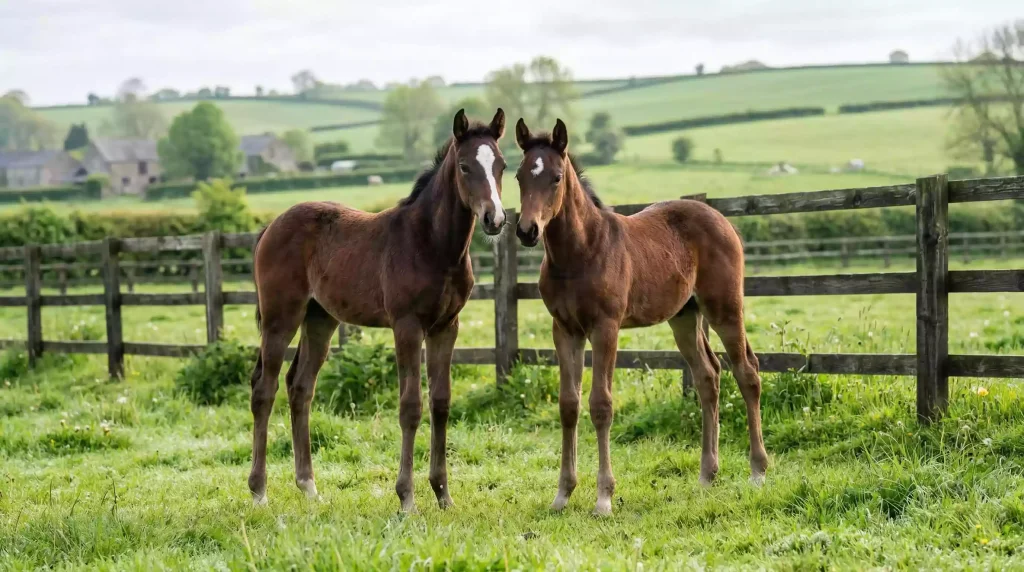
Fewer horses in training means fewer runners in each race, which means smaller fields, less competitive results and a narrower pool of form to study. The horse population in UK racing has been declining for years, and the consequences are now visible in the results themselves. Average field sizes are falling. Some race divisions that would once have produced two competitive contests are now run as a single, thin race. The pipeline — measured by the annual foal crop — shows no sign of reversing the trend.
The BHA’s 2026 Racing Report recorded 21,728 horses in training at some stage during the year, a decline of 2.3% from 2026. That followed a 1.1% drop between 2023 and 2026, and further falls in preceding years. This is not a blip. It is a structural contraction that the sport’s administrators are actively trying to arrest — with varying degrees of success.
Horses in Training: The Numbers
The 21,728 figure covers every thoroughbred registered by its trainer as in active training during any part of 2026. It includes both Flat and National Hunt horses, as well as dual-purpose animals that compete under both codes. The number has fallen in each of the last several years, and the trajectory is consistent across both codes — though the decline has been steeper in jump racing, where the physical demands of the sport and the longer development timeline for young horses create additional barriers to participation.
The decline is not uniform across quality levels. The BHA tracks the number of horses achieving performance thresholds — 90 or above on the Flat and 135 or above over jumps — as a measure of the sport’s competitive quality. On the Flat, this figure actually rose slightly to 1,423 in 2026, up from 1,398 the year before. Over jumps, the 135-plus population stabilised at 489 after several years of significant declines. These are encouraging data points within an otherwise downward trend: the best horses are being maintained even as the broader population contracts.
For the results consumer, the population figures provide essential context. A 10-runner handicap on the Flat in 2026 might have been a 12-runner handicap in 2020, with the same course, same class, same conditions. The result is the same format — finishing positions, SP, distances — but the competitive environment is thinner. The data behind the data tells you that.
Foal Crop: The Pipeline Problem
The foal crop is the leading indicator of future horse population. Every racehorse begins as a foal, is typically broken in as a yearling, enters training at two (on the Flat) or three to four (over jumps), and reaches the racecourse one to two years after that. The foal crop of any given year feeds into the racing population three to five years later. If the foal crop shrinks, the racing population will follow with a lag.
In 2026, the total number of British foals bred for racing was 4,015. That is a 20-year low. In 2026, the figure was 4,198. In 2023, it was 4,510. The decline is accelerating. The data comes from Weatherbys General Studbook — the official registry of thoroughbred breeding in Britain — and is published annually via the Horse PWR platform maintained by the BHA and Great British Racing.
The causes are multiple. The economics of owning a broodmare and breeding a foal are challenging: stud fees, veterinary costs, keep and insurance add up to a significant outlay before the foal has even taken its first steps. If the anticipated return — through sales, racing prize money or breeding value — does not justify the investment, fewer breeders participate. The ongoing decline in betting turnover, which feeds through to prize money via the levy, weakens the financial case for breeding further.
Only 69% of foals bred for the sport in Britain who were born in 2015 eventually entered training, according to Horse PWR data. That means nearly a third of the foal crop never made it to the racecourse at all — lost to injury, unsuitability, or commercial decisions along the way. The effective yield from foal to racehorse is lower than the headline foal crop number suggests, making the decline in raw numbers even more consequential.
Impact on Field Sizes and Competitiveness
The connection between horse population and field sizes is direct. Average field sizes on the Flat in 2026 stood at 8.90 runners per race, down from 9.14 in 2026. Over jumps, the decline was sharper: 7.84 in 2026, down from 8.49 the year before. These are not dramatic year-on-year drops in isolation, but they extend a multi-year trend that is compressing the competitive depth of British racing.
Smaller fields produce less competitive races. An eight-runner handicap has fewer possible outcomes than a 14-runner handicap. The favourite’s chance of winning increases in a small field, which reduces the average SP of winners, which reduces the value available to bettors, which reduces betting turnover, which reduces levy income, which reduces prize money, which discourages owners from keeping horses in training. The cycle is self-reinforcing, and the horse population decline sits at its origin.
Industry Responses
The BHA and its partners have launched several initiatives designed to slow or reverse the population decline. The Great British Bonus scheme, majority-funded by the Horserace Betting Levy Board, pays bonuses to the breeders, owners, trainers, jockeys and stable staff of qualifying British-bred fillies that win races. The scheme has now distributed over £20 million in bonuses since its launch in 2020 and is credited with increasing demand for British-bred fillies at sales.
The Elite Mares Scheme targets jump racing specifically, encouraging the retention of high-quality National Hunt mares for breeding purposes by providing financial incentives. The Training Fees Credit Scheme, introduced alongside the 2026 fixture list announcement, offers credits to offset the cost of keeping horses in training — a direct intervention aimed at the economics that drive owners to withdraw horses from the sport.
A £3.2 million increase in prize money for developmental races, spread across both codes, was announced as part of the 2026 fixture policy. This targets the lower tiers of the programme where field sizes have declined most sharply, on the basis that better rewards at entry level will encourage more owners to enter the sport and keep their horses racing for longer.
Whether these measures will be sufficient to reverse a decade-long trend remains uncertain. The BHA’s own modelling forecasts that the number of runs in Britain in 2027 will be 6 to 7% lower than in 2026. That forecast is already shaping discussions about the 2027 fixture list. The results you see today are produced by a horse population that is smaller than it was last year, and last year’s population was smaller than the year before. The trend is the context. The results are the consequence.