Women in Horse Racing — Jockeys, Trainers and Milestones
 Available in US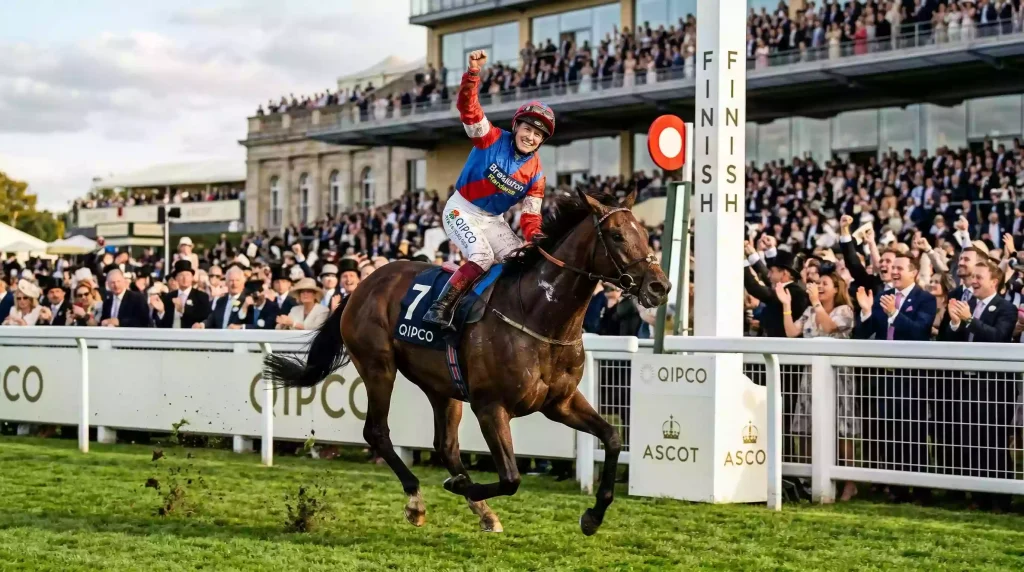
Rachael Blackmore retired in May 2026 as the most recognisable figure in horse racing — not the most recognisable female figure, the most recognisable figure, full stop. Her departure from the saddle, after a career that included a Champion Hurdle, a Cheltenham Gold Cup and a Grand National, left a gap in the sport’s public profile that no single rider has yet filled. But the trail she and others blazed continues. Women in horse racing are winning at every level, training at every course, and reshaping a sport that was exclusively male-dominated within living memory.
The results archive tells the story in hard numbers. The milestones are not symbolic — they are entries in official BHA results records, visible to anyone who searches by jockey name and filters by grade. The progress is measurable. The gap that remains is equally so.
The wider figures are in jockey and trainer statistics.
Key Milestones in Results
Blackmore’s career produced results that would have been unthinkable a generation ago. In 2021, she won the Champion Hurdle at the Cheltenham Festival aboard Honeysuckle — the first female jockey to win the race. Later that spring, she became the first woman to win the Grand National, riding Minella Times at Aintree at odds of 11/1. In 2022, she won the Cheltenham Gold Cup on A Plus Tard, the sport’s most prestigious prize, in front of a post-pandemic crowd that exceeded 280,000 across the four days.
These were not consolation prizes in weak fields. Blackmore beat the best male jockeys in the biggest races on the calendar, at the meetings that attract the largest audiences. Over five million people attended British racecourses in 2026, and many of them were drawn to the sport in part by Blackmore’s visibility. Her results are a matter of historical record: Grade 1 victories, festival tallies and championship performances that stand alongside any rider of her era.
Before Blackmore, the path had been marked by others. Katie Walsh won the Champion Bumper at Cheltenham in 2018 aboard Relegate — her third festival winner, adding to victories in the National Hunt Chase and County Hurdle in 2010. Bryony Frost became the first woman to ride a Grade 1 winner over fences in Britain when Frodon won the Ryanair Chase at Cheltenham in 2019. Hollie Doyle, on the Flat, was the first female jockey to ride a winner at Royal Ascot’s five-day meeting in 2020 and has since accumulated Group 1 victories and a string of records for wins in a calendar year.
Each of these results exists in the same database as every other. They carry the same SP, the same distances, the same in-running comments. What distinguishes them is the context — the barriers that had to fall before the result could happen.
Female Trainers Making an Impact
The training profession has been slower to diversify than the jockeys’ ranks, partly because of the capital required to set up and maintain a yard. But the results of several female trainers demonstrate that the barrier is economic, not competence-related.
Jessica Harrington, based in County Kildare, has operated at the highest level of both Flat and National Hunt racing for decades. Her training of Sizing John to win the Cheltenham Gold Cup in 2017 — one of the few trainers to have saddled a Gold Cup winner while also competing at Group 1 level on the Flat — makes her one of the most versatile operators in either jurisdiction.
In Britain, Venetia Williams has been a consistent force in jump racing for more than 20 years, with a particular strength on soft and heavy ground. Her record at the Cheltenham Festival and on the major handicap circuit is formidable. Emma Lavelle trained Paisley Park to win the Stayers’ Hurdle at Cheltenham in 2019, a performance that put her in the same company as the sport’s most established training operations. Lucy Wadham, operating from a smaller base, has produced Group-level winners on the Flat that demonstrate what meticulous preparation can achieve without the resources of a mega-yard.
The pipeline of younger female trainers is growing. Several women who started as assistant trainers or stable staff have taken out their own licences in recent years, building strings of horses and generating results that contribute to the broader statistical picture. The current results table shows their names alongside every other trainer — undifferentiated by gender, measured only by finishing positions and strike rates. The database does not care who holds the licence. It records the result.
Participation Data
The audience for horse racing remains heavily male. Survey data from 2026 found that 22% of men bet on horse racing monthly, compared to 8.5% of women — a gap of more than two to one. Attendance at racecourses is more balanced, with women comprising a substantial share of the crowd at major festivals, but the betting participation gap suggests that the sport’s commercial core — the money that funds prize money via the levy — is still overwhelmingly male-driven.
This gap is both a challenge and an opportunity. The visibility of female jockeys and trainers at the highest level is a proven driver of engagement. Blackmore’s Grand National victory in 2021 generated media coverage that reached audiences who had never watched a horse race. Doyle’s consistent presence on ITV broadcasts has normalised the image of a female jockey competing — and winning — against male rivals. The results themselves are the most powerful marketing tool available: not campaigns, not slogans, but winners.
Cheltenham 2026: Blackmore as Ambassador
In retirement, Blackmore has taken on an ambassadorial role with the Jockey Club, the organisation that owns Cheltenham racecourse. Her brief for the 2026 Festival is explicitly focused on attracting more women to the sport — both as racegoers and as participants. The appointment acknowledges that the sport’s most effective recruitment tool is not an advertising budget but a public figure who demonstrated, through results, that horse racing is a sport where gender is not a limiting factor.
The Jockey Club’s broader efforts to reverse the decline in Cheltenham Festival attendance — which has fallen 22% from the 2022 peak — include pricing adjustments, improved on-course facilities and expanded entertainment options. Blackmore’s role sits alongside these structural changes as a softer but potentially more powerful intervention: a face and a story that resonates beyond the traditional racing audience.
The question is whether visibility translates into sustained participation. Blackmore’s riding career produced results that made front pages worldwide. Her retirement role produces appearances, interviews and promotional events. The former created hard data in the results archive. The latter aims to create new fans who will generate their own engagement — attending meetings, placing bets, checking results — and who may, in time, produce the next generation of riders and trainers who happen to be women. The results will be the evidence, as they always are.
Created by the "UK Horse Racing Results" editorial team. The wider context is set out in today's UK horse racing results.
