
All 59 UK Racecourses — Track Guide, Stats and Today’s Results
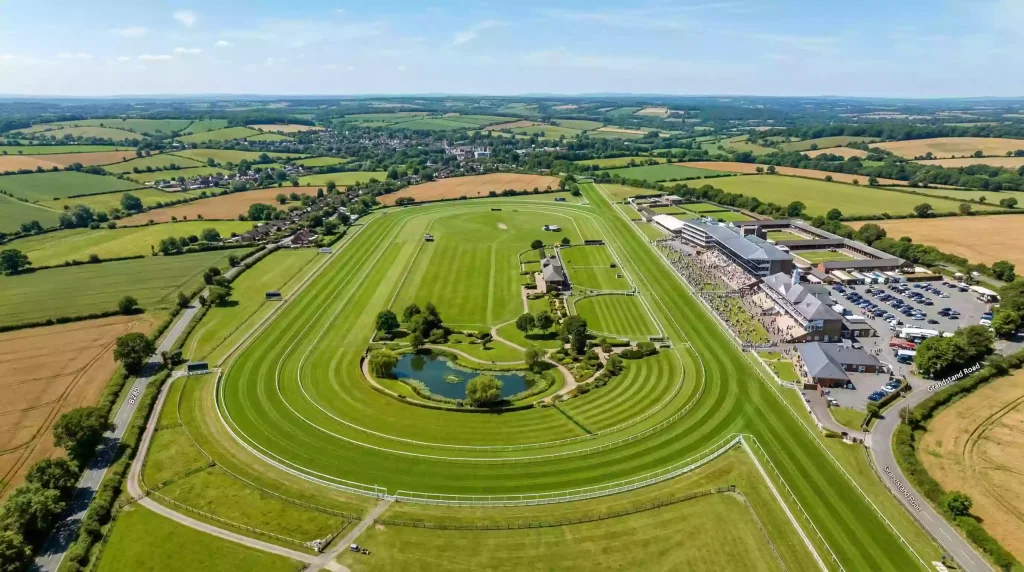
From the manicured lawns of Royal Ascot to the tight bends of Chester, from the exposed moorland at Hexham to the all-weather strip at Wolverhampton — the 59 licensed UK racecourses form a network unlike anything else in world sport. Each track has its own character, its own quirks, and its own way of shaping race results. A horse that thrives on the stiff uphill finish at Cheltenham might struggle on the flat, speed-favouring track at Kempton. A jockey who excels at reading Chester’s tight left-handed turns may find the wide open expanses of Newmarket a completely different challenge.
Understanding UK racecourses is not a side note to understanding results — it is fundamental to it. Track configuration, surface type, going conditions, draw bias and gradient all influence finishing positions in ways that the raw result alone does not reveal. When you see a horse win by six lengths at one course and then finish mid-field at another, the difference is often the track, not the horse.
This guide provides a working overview of how British racecourses are classified, profiles the major venues and their signature races, acknowledges the smaller tracks that hold the sport together, and explains the physical characteristics that make each course distinct. It is a reference designed to sit alongside results, adding the context that finishing positions alone cannot provide. With more than five million people passing through British racecourse turnstiles in 2026 — the first time attendance has exceeded that mark since before the pandemic — the racecourse network remains the physical foundation on which the entire sport is built.
How UK Racecourses Are Classified
British racecourses are classified along several axes, and understanding those classifications helps explain why certain courses host certain types of racing — and why results at one venue might not translate to another.
By Racing Code
The first distinction is by racing code. Some courses are Flat-only, hosting races without obstacles on turf or all-weather surfaces. Others are jump-only (also called National Hunt), featuring hurdle races and steeplechases. A significant number are dual-purpose, staging both Flat and jump racing at different times of the year. The Flat season traditionally runs from April to October, while the jump season runs through the winter months, though all-weather Flat racing now provides year-round coverage at dedicated venues.
Across the 1,460 fixture days staged in Britain in 2026, according to the BHA’s published fixture list, these courses collectively delivered racing on most days of the year. The distribution is not even — summer months see multiple meetings per day, while midwinter fixtures are sparser and heavily concentrated at all-weather and jump venues.
By Direction
Racecourses are either left-handed, right-handed, or feature a straight course (no turns at all). This matters because horses can show a preference for one direction over another. A horse that hangs to the right — drifting outward under pressure — will lose ground on a left-handed track but may run straighter on a right-handed one. Newmarket’s Rowley Mile, uniquely, is an essentially straight course with no meaningful turns, which removes directional bias entirely but introduces its own challenge: the wide-open track offers no cover, and horses must sustain their effort without the help of a rail to guide them.
By Surface
Most British courses race on turf, which is the traditional and still predominant surface. A smaller number have all-weather tracks — synthetic surfaces that drain quickly and are rideable in almost any weather. The all-weather courses are Chelmsford City, Kempton Park, Lingfield Park, Newcastle, Southwell and Wolverhampton. Each uses a different synthetic material, which is covered in detail in the all-weather section below.
By Fixture Grading
The BHA classifies fixture days into tiers. Premier fixtures are the top-quality racedays with the highest prize money and the strongest fields — Royal Ascot, the Cheltenham Festival, the Epsom Derby meeting and similar marquee events. Core fixtures form the bulk of the schedule, providing everyday racing across the country. Development fixtures are smaller meetings, often on midweek afternoons, that serve as opportunities for less experienced horses and connections. The grading determines not just prize money but also the level of media coverage and the intensity of betting activity that each meeting attracts.
The Major Venues and Their Signature Races
A handful of UK racecourses occupy a status that goes beyond sport. These are the venues that host the races the wider public knows by name, attract the largest crowds, and generate the results that lead the evening news.
Ascot
Home to Royal Ascot in June — five days of top-class Flat racing attended by the Royal Family and around 300,000 racegoers across the week. The track is right-handed, galloping in character, with a stiff uphill finish that tests stamina. Key races include the Gold Cup (two and a half miles), the Queen Anne Stakes and the King George VI and Queen Elizabeth Stakes in July. Ascot also hosts high-quality jump racing in the winter months, making it one of the most versatile venues in the country.
Cheltenham
The home of jump racing. The left-handed, undulating track at Prestbury Park is defined by its famous hill — a steep climb to the winning post that sorts out the stayers from the pretenders. The Cheltenham Festival in March is the centrepiece, but the course also hosts valuable meetings throughout the National Hunt season, including the November Meeting and the International Hurdle card in December.
Aintree
The Grand National course at Aintree is unique in British racing. The National fences — including Becher’s Brook, the Canal Turn and the Chair — are larger and more demanding than standard steeplechase fences, and the race’s four-mile-plus distance is the ultimate test of stamina and jumping. Aintree also hosts a separate Mildmay course for regular jump racing and a Flat track used during the summer.
Epsom
The home of the Derby and the Oaks — the two Classic races that define the three-year-old Flat season every June. Epsom’s track is one of the most unusual in racing: a left-handed horseshoe shape that climbs steeply before sweeping downhill around Tattenham Corner and levelling out for the final furlong. The camber and gradient make Epsom a specialist’s track, and Derby results frequently produce surprises that would not occur on a more conventional layout.
Newmarket
The headquarters of British Flat racing. Newmarket has two courses — the Rowley Mile (used in spring and autumn) and the July Course (summer). Both are wide, straight-ish tracks on the exposed Suffolk heath, where the wind and the going can change conditions dramatically. The 1000 Guineas, 2000 Guineas, Cambridgeshire and Cesarewitch are among the headline races. Newmarket is also the training centre for hundreds of racehorses, making its gallops as important to the sport as its racecourse.
Doncaster
Home to the St Leger — the oldest Classic, first run in 1776 — and the Lincoln Handicap that traditionally opens the Flat turf season. Doncaster’s left-handed, flat track is a fair test that produces results largely determined by ability rather than track idiosyncrasy. Town Moor also hosts the St Leger Festival in September, one of the richest meetings outside of Royal Ascot.
York
The Knavesmire at York is widely considered one of the fairest and best-maintained Flat tracks in the country. Left-handed with sweeping turns and a long straight, it rewards quality and rarely throws up freak results. The Ebor Festival in August is York’s showcase, headlined by the Juddmonte International and the Ebor Handicap, one of the most valuable handicaps in European racing.
Regional Racecourses: Smaller Tracks, Vital Ecosystem
The headline venues get the television cameras and the national press, but the sport’s infrastructure depends on dozens of smaller racecourses that stage racing week in, week out, often in front of modest crowds. These tracks are not glamorous. They are essential.
Courses like Cartmel in Cumbria, Sedgefield in County Durham, Newton Abbot in Devon and Musselburgh near Edinburgh host racing that serves local communities, provides opportunities for horses that are not quite good enough for the Premier circuit, and generates economic activity in areas that might otherwise see very little of it. The industry supports more than 20,000 direct jobs across its 59 licensed racecourses, according to a House of Commons Library research briefing — and a significant proportion of those jobs are at regional tracks where the racecourse is one of the larger local employers.
Regional courses tend to host Core and Development fixtures with lower prize money and smaller fields. But smaller does not mean uncompetitive. A six-runner novice hurdle at Sedgefield can be fiercely contested, and the results at these tracks are a vital part of the form book. Many horses that go on to compete at Cheltenham, Ascot or Aintree cut their teeth at regional venues. Ignoring their results means ignoring the early chapters of a horse’s career.
There is also a social dimension. For many communities in rural England, Scotland and Wales, the local racecourse is a gathering point — a place where farming communities, small businesses and families come together on a Saturday afternoon. Cartmel’s meetings during bank holiday weekends are legendary for their atmosphere, drawing crowds that far exceed what you might expect from a course in the Lake District. The results at these tracks may not make the national headlines, but they matter deeply to the people who attend.
The financial pressures on regional courses are real. With betting turnover declining and costs rising, some smaller venues operate on thin margins. The BHA’s fixture allocation process — which determines how many meetings each course stages per year — is a constant negotiation between the demand for quality racing and the need to keep regional courses viable. Every fixture allocated to a small track is an investment in the sport’s geographic diversity, and every one removed is a step toward centralisation.
Track Characteristics That Shape Results
The physical characteristics of a racecourse do not just create scenery. They create outcomes. Two horses of identical ability will produce different results at different tracks, and understanding why is one of the keys to reading race results with any depth.
Gradient
Some courses are flat — Kempton, for instance, is almost billiard-table level. Others involve significant changes in elevation. Cheltenham’s uphill finish is the most famous gradient in British racing: the final climb from the last fence to the winning post sorts out horses that are genuinely staying from those that are tiring. Epsom’s downhill run to Tattenham Corner is equally influential but in the opposite direction — it tests a horse’s balance and the jockey’s ability to ride a turn on a camber at speed. Results at these courses need to be interpreted through the lens of the track’s terrain.
Turns and Track Shape
Chester is the extreme example. Its tight, left-handed turns favour front-runners who can hug the rail and minimise the distance they cover. Horses drawn wide at Chester are at a measurable disadvantage, which makes the draw one of the most important factors in results there. At the other end of the spectrum, Newmarket’s wide, straight track eliminates the impact of turns entirely, placing the emphasis on raw speed and stamina.
Draw Bias
On Flat courses with a straight run to the first turn, the stall number a horse starts from — the draw — can have a significant impact. At courses like Beverley, Catterick and Thirsk, statistical analysis over thousands of races has shown persistent draw biases that vary with the distance and the going. A low draw at Beverley over five furlongs, for example, is a well-documented advantage. Results at these courses should always be read with the draw in mind; a horse that finished fourth from a poor draw may have run a better race than its position suggests.
Field Sizes and Course Character
Track characteristics also influence field sizes. The BHA’s 2026 Racing Report showed average field sizes of 8.90 on the Flat and 7.84 over jumps, but those averages conceal wide variation between courses. Large, galloping tracks like York and Newbury tend to attract bigger fields because there is room for every horse to get a fair run. Tight, specialist tracks tend to attract smaller fields because trainers are more selective about where they send their horses. The economic health of British racing depends on these 59 courses collectively, and the industry’s contribution of £4.1 billion to the UK economy — as the BHA stated in its submission to the Gambling Act Review: “The racing industry has direct revenues in excess of £1.47 billion and makes a total annual contribution to the UK economy of £4.1 billion” — British Horseracing Authority, House of Commons Library — reflects the breadth and diversity of the racecourse network.
All-Weather Surfaces Explained
All-weather racing was introduced to Britain in 1989 to provide a year-round Flat racing programme that would not be disrupted by the weather conditions that regularly cause abandonment of turf meetings in winter. It has since become a significant part of the fixture calendar, with six dedicated all-weather courses operating synthetic surfaces that drain quickly and provide a consistent racing surface regardless of rain, frost or drought.
The surfaces themselves are not identical. Chelmsford City and Kempton Park race on Polytrack, a mixture of polypropylene fibres, recycled rubber and wax-coated sand. Newcastle uses Tapeta, a proprietary blend of wax, fibres and sand developed in the United States. Southwell originally raced on Fibresand — a sand-based surface with added fibres — and switched to Tapeta in recent years. Lingfield Park uses Polytrack, and Wolverhampton races on Tapeta. Each surface has slightly different playing characteristics: Polytrack tends to ride as a fair surface with minimal bias, while Tapeta can favour front-runners at certain configurations.
For result interpretation, the key point about all-weather racing is consistency. Because the surface does not change with the weather (barring extreme temperatures), form on all-weather tracks is generally more reliable than turf form. A horse that runs well at Kempton is likely to run well at Kempton again, because the conditions will be similar. This contrasts with turf racing, where a course that rode firm in June might ride soft in October, producing completely different results from the same horses.
That consistency makes all-weather results particularly useful for punters who value data. Patterns hold. Track biases are stable. Horses that handle the surface tend to handle it repeatedly, which means form figures from all-weather racing carry more predictive weight — race for race — than equivalent turf figures where conditions change between meetings. The trade-off is that all-weather racing generally attracts weaker fields and lower prize money than turf racing, so the quality of the competition is lower on average.
One practical consideration: some horses perform exclusively on all-weather surfaces and rarely or never run on turf. Their form is effectively contained within the all-weather circuit. Conversely, a horse with a strong turf record may flounder on a synthetic surface if it does not handle the kickback (the spray of material thrown up by the horses in front) or the different ground feel. Results from all-weather meetings should be assessed within the all-weather ecosystem first, and only cautiously compared to turf form.
How to Find Results for a Specific Course
With racing taking place at multiple venues simultaneously, finding the results for a specific course requires knowing where to look.
The BHA website is the authoritative source. It publishes results for every race at every licensed course in Britain, including full finishing orders, starting prices, winning distances and stewards’ reports. Results are typically available within minutes of the official result being confirmed and are archived indefinitely, making the BHA site the best resource for both current and historical course-specific data.
Racing Post offers the most detailed commercial results service, with in-running comments, sectional times (where available), form analysis and a powerful search function that allows filtering by course, date, race type, distance and going. The site and its companion app are the tools of choice for serious form students who need to drill into course-specific patterns over extended periods.
At The Races (now Sky Sports Racing’s digital platform) provides live results alongside streaming coverage, which is useful if you want to watch replays from a specific course. ITV Racing covers the major meetings live on terrestrial television, and highlights are available on the ITV Hub after broadcast.
For anyone building a picture of how a particular horse performs at a particular course, the ability to filter results by venue is essential. A horse’s overall record might look modest, but its record at one specific course — where the track shape, surface and distance suit it perfectly — might be exceptional. The tools to uncover that pattern are freely available. The skill is knowing to look for it.